IUMPR Table
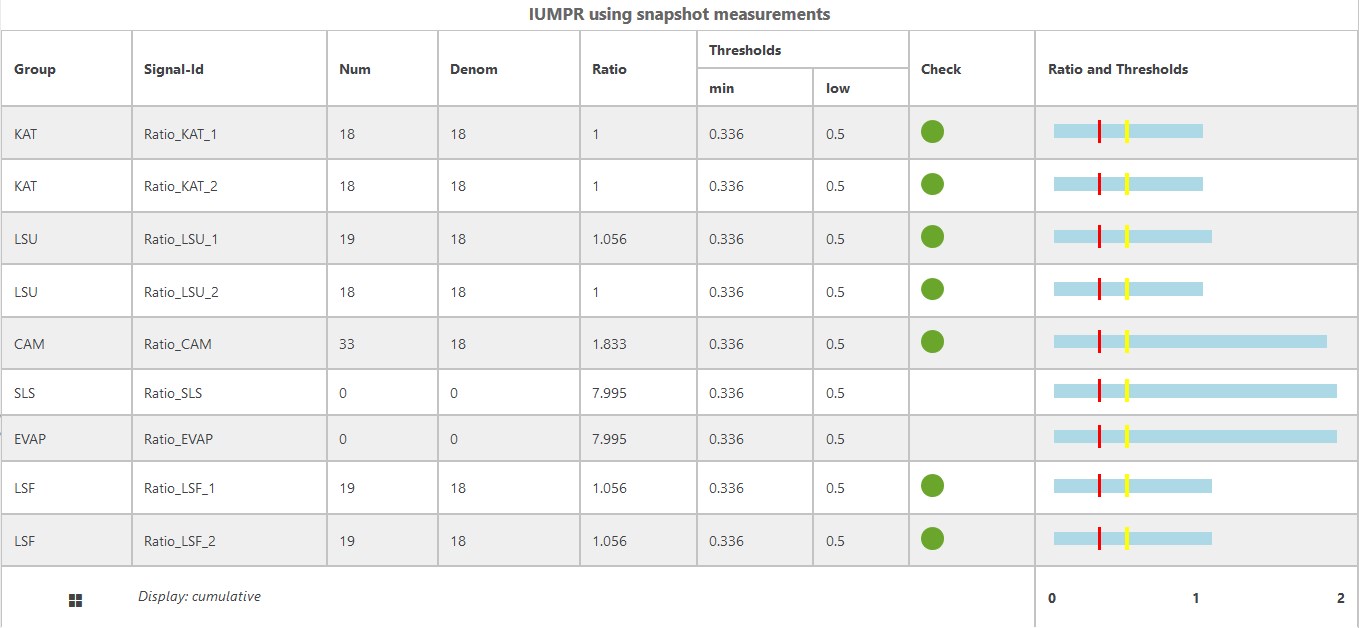
Table type that is used for analyzing DFCs. Each row belongs to one signal and contains the numerator, denominator, the resulting ratio, thresholds, traffic light, and a graphic showing ratio and thresholds.
The numerators and denominators of the ratios can be passed to EATB by two different ways:
- bit: The numerators and denominators of the ratios are stored as bits 6 and 7 of one DFC signal (int8).
- int: The numerators and denominators of the ratios are stored as "counter" signals where the numerator and denominator are counted events and provided in two separate signals.
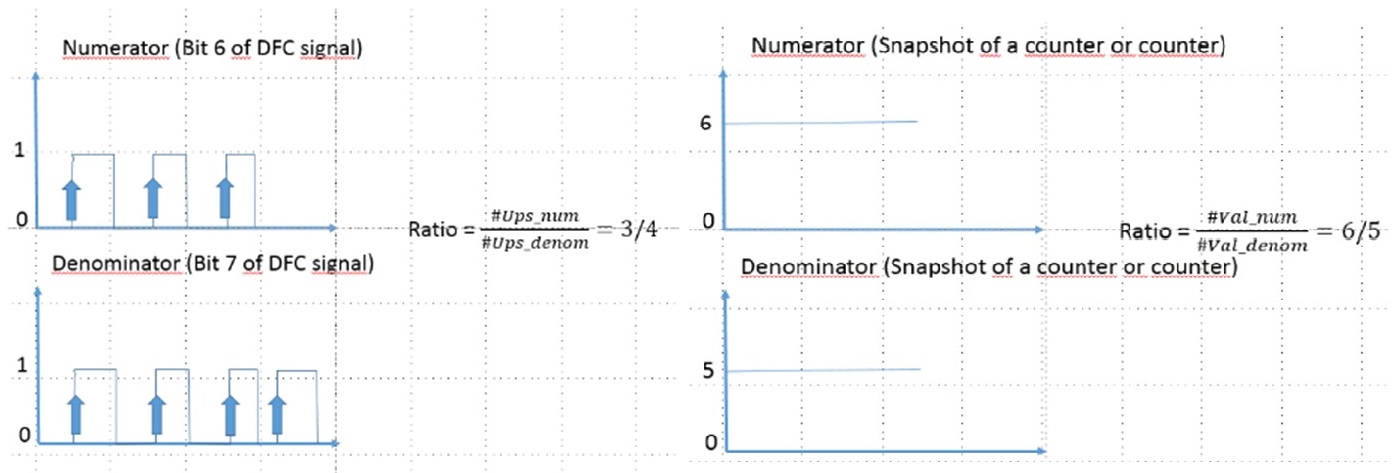
EATB detects the situation based on the number of signals you provide. Therefore, you cannot mix "bit" and "int".
The following table shows exemplary situations that can appear, where the ratios are set with respect to judicial laws (where defined):
| Measurement |
M1 |
M2 |
M3 |
M4 |
M5 |
M6 |
M7 |
M8 |
|---|---|---|---|---|---|---|---|---|
|
Numerator |
0 |
1 |
0 |
1 |
empty |
empty |
~=0 |
10 |
|
Denominator |
0 |
0 |
1 |
1 |
empty |
~=0 |
empty |
1 |
|
Ratio (true | set) |
NaN | 7.995 |
Inf | 7.995 |
0 | 0 |
1 | 1 |
-- | -- |
-- | -- |
-- | -- |
10 | 7.995 |
|
Status |
-- |
green |
red |
green |
gray |
gray |
gray |
green |
In this table, the status "–" means that no traffic light is shown. For more information, see Traffic Lights. For more information about the available display types for an IUMPR table, see Display Types.