Running a SALT Campaign
The measurement campaign starts at the safe center point. SALT generates transient trajectories for the configured input variables. Each trajectory is evaluated before it is proposed for execution.
The evaluation considers the configured constraints and the expected information gain for improving the output models. Only trajectories that satisfy the defined constraints are proposed. During the campaign, compliance with the constraints is monitored based on the available measurement data and model predictions.
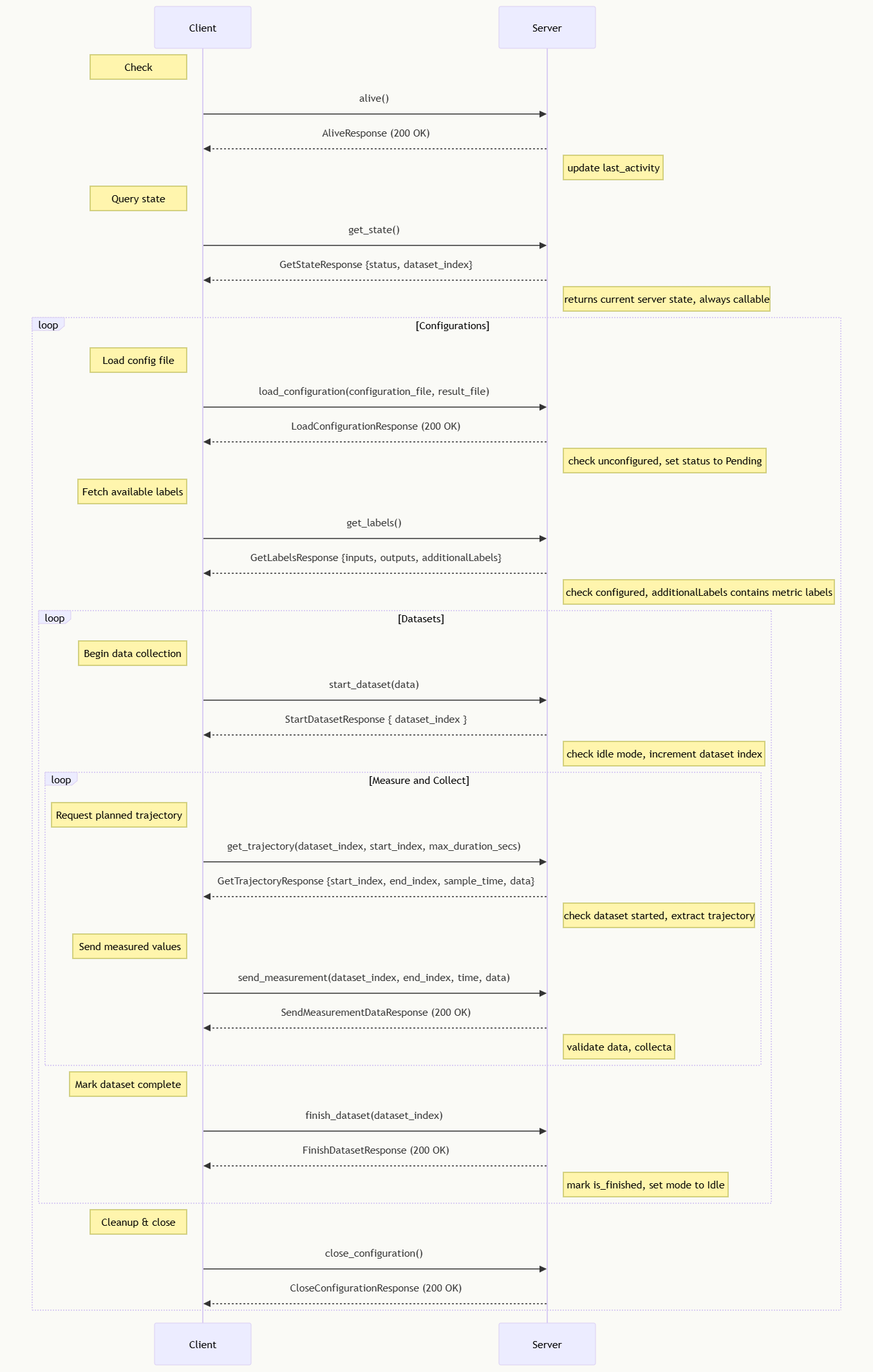
The typical workflow starts when the SALT configuration is loaded. The initial values of the input variables and output variables are then transferred to SALT. SALT starts a new dataset and assigns a dataset index. The test bench automation system requests a planned trajectory for the active dataset and executes the returned trajectory.
After execution, the acquired measurement data is transferred back to SALT. SALT updates the internal models with the new measurement data and generates a new trajectory based on the updated models. This loop continues until the defined quality goals are reached or the campaign is finished.
Each candidate trajectory is evaluated by an internal model quality metric. The metric determines whether the trajectory is expected to provide significant new information for refining the output models.
A started dataset is finished by providing the dataset index. After the dataset has been finished, the configuration can be closed.
The active configuration can be closed when no dataset is running. Closing the configuration finalizes the current SALT workflow and releases the loaded configuration.
Campaign sequence
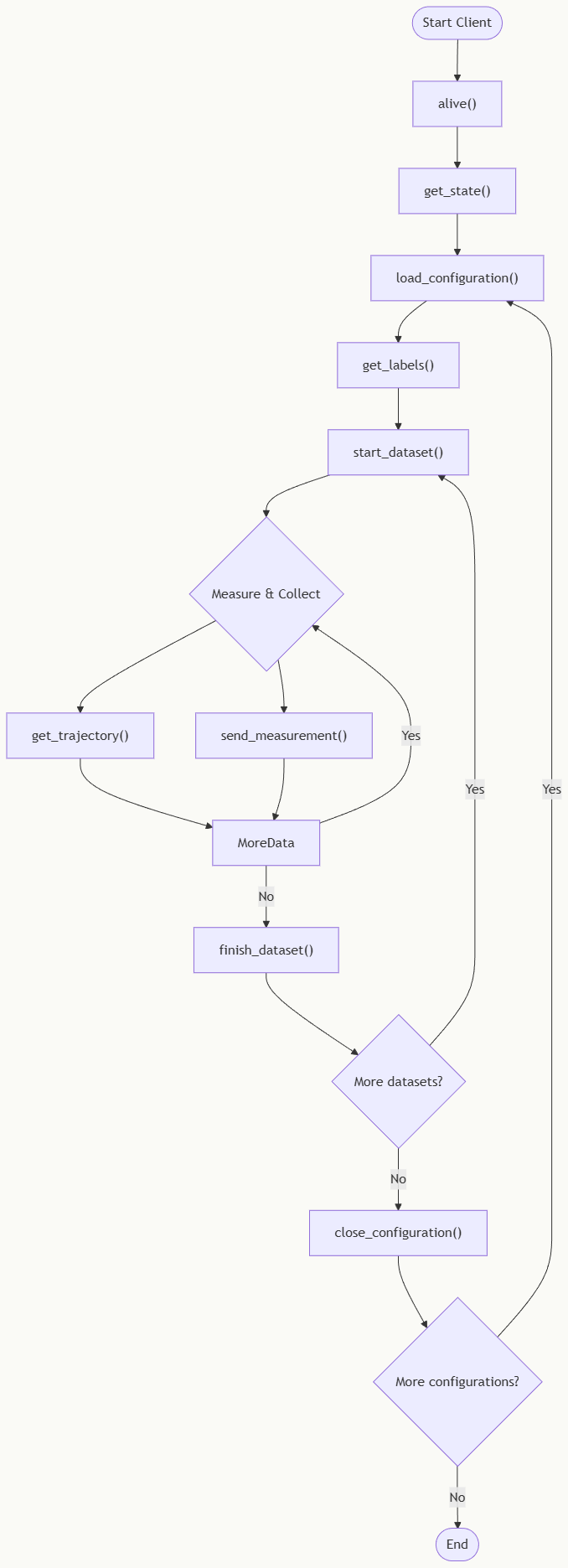
Use the following sequence when integrating SALT into an automated measurement workflow.
-
Load the SALT configuration.
-
Transfer the initial values of the input variables and output variables.
-
Start a new dataset.
-
Request a planned trajectory for the active dataset.
-
Execute the trajectory on the test bench.
-
Transfer the acquired measurement data back to SALT.
-
Let SALT update the internal models.
-
Request the next trajectory.
-
Repeat the loop until the quality goals are reached or the campaign is finished.
-
Finish the dataset.
-
Close the configuration.