Enumerations
Enumerations are unique types with values taken from a group of known constants called enumerators.
The table summarizes the public methods available for enumerations.
Method | Returns | Usage |
enum1.ConvertTo Numerical() | udisc | Returns the value of the enumerator selected for enum1. The return type depends on the value of the selected enumerator (positive value – udisc, negative value – sdisc). |
enum1.min(enum2) | enumeration | Returns the lower of the two enumerators selected for enum1 and enum2. |
enum1.max(enum2) | enumeration | Returns the upper of the two enumerators selected for enum1 and enum2. |
enum4.between(enum2,enum3) | log | Checks whether the enumerator of enum4 lies between the enumerators selected for enum2 and enum3. |
Note All involved enumerations must be of the same type. | ||
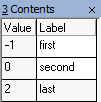
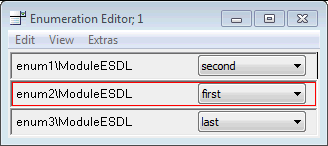
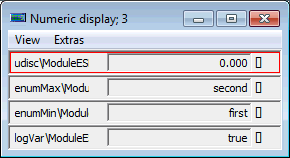
In ESDL, these methods can be used as shown in the following example, provided that all enumerations are of the same type:
udisc = enum1.convertToNumerical();
enumMax = enum1.max(enum2);
enumMin = enum1.min(enum2);
logVar = enum1.between(enum2,enum3);
 EXAMPLE EXAMPLE |
|---|
See also
Component Manager – Creating an Enumeration